You are not waiting. You are hiding in a respectable costume.
Waiting to feel ready looks responsible.
You are gathering information. You are getting your ducks in a row. You are going to start the application, the conversation, the program, the apology, as soon as the feeling shows up that says now.
Here is the uncomfortable part. For most of the things that matter, that feeling does not exist. There is no internal green light scheduled to arrive. The nervous system does not issue permission slips for things it perceives as risky.
So the wait is not a wait. It is a decision to not act, renewed daily, wearing the costume of preparation.
Readiness is an output, not an input
This is the reversal that changes everything.
We assume the sequence is feel ready, then act. Confidence first, performance second.
The actual sequence runs the other way. You act small, the action generates evidence, the evidence changes your perception of what you can handle, and something like readiness shows up afterward as a byproduct.
Anyone who has done anything hard knows this from the inside. The first day of the new job did not feel ready. The first honest conversation did not feel ready. Ready arrived around week three, built entirely out of accumulated participation.
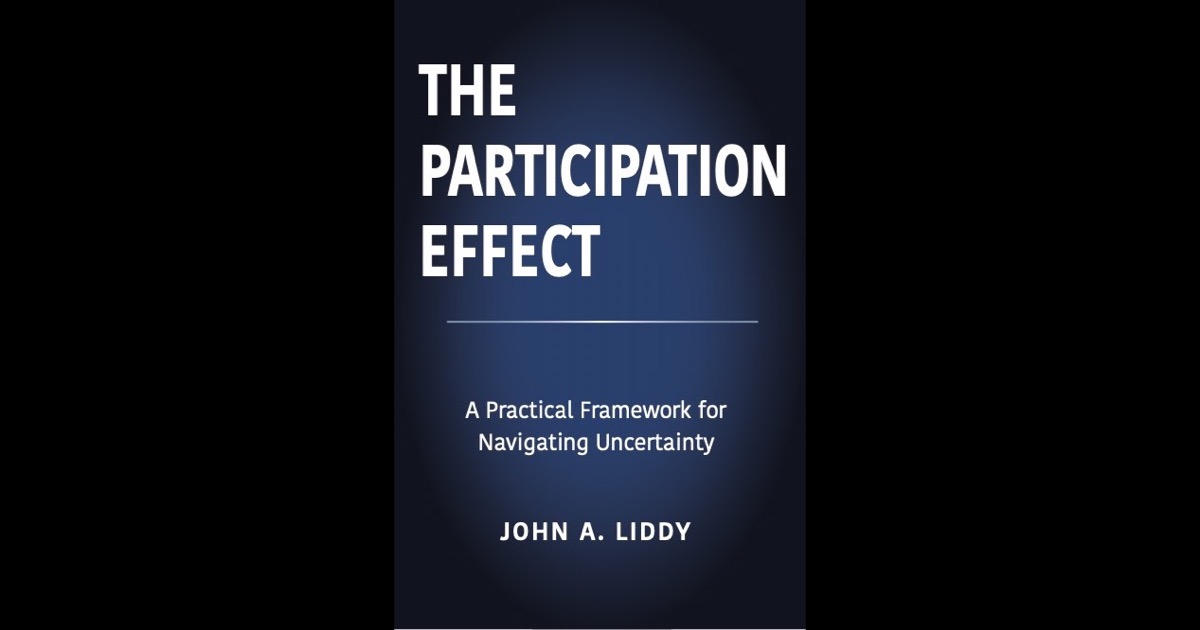
This is the engine at the center of The Participation Effect. You do not think your way into a new probability. You participate your way into one, and your perception updates to match the evidence. The book is the framework behind this article, and it is on Amazon if the loop described here is one you recognize. The smallest daily version of the practice is in Daily Rise.
What the waiting actually protects
The wait is not lazy. It is protective.
As long as you have not started, you have not failed. The plan stays perfect because it stays theoretical. The book you have not written has no bad chapters. The conversation you have not had contains no wrong sentences.
Anxiety loves this arrangement. It gets to call itself prudence.
The cost is invisible because it is paid in things that never happen. Nobody sends you a bill for the year the decision sat in the drawer. You just get a smaller life, delivered one postponed Tuesday at a time.
Shrink the unit until ready stops mattering
Here is the practical move.
If you need to feel ready, the unit is too big. Nobody needs readiness to send one email. Nobody needs readiness to write one ugly paragraph, or look up one phone number, or put shoes on and stand outside the gym.
Shrink the action until the readiness question becomes absurd.
This is not a productivity trick. It is emotional regulation by another route. A small enough action does not trip the alarm system, which means you can move while the larger version of the task still feels impossible. The feeling of impossibility does not have to change first. It changes after, when the evidence comes in.
Clarity comes from contact, not contemplation
There is a second payoff most people miss.
You think you are waiting for clarity. Should I take the job, end the lease, start the program. So you run the simulation again and again, hoping one more loop produces the answer.
Simulations run on stale data. Contact produces fresh data.
One real conversation with someone who has done the thing tells you more than a month of ceiling-staring. One visit, one draft, one trial week. The information you are waiting for mostly lives on the other side of small actions, not inside your head. If overthinking is your home terrain, the longer treatment of this trap is in the book built for exactly that mind.
Start before the feeling and let the feeling catch up
This is the whole instruction.
Not start recklessly. Not ignore real constraints. Just stop assigning veto power to a feeling that was never going to arrive on its own.
Pick the stalled thing. Find the version of it small enough that ready is not required. Do that version today, badly if necessary.
Then notice what happens to the feeling tomorrow. Not transformed. Slightly different. A few degrees more possible than it was.
That few degrees, repeated, is how the whole thing gets done.
If you want the full framework for acting before certainty and letting perception catch up to participation, The Participation Effect is on Amazon. If you want a daily two-minute practice that makes the small starts automatic, use Daily Rise.