The most satisfying trap in self help
You finally understand why you do the thing.
The pattern clicks. You trace it back to childhood, to a fear, to an old wound. The whole story lines up, and a wave of relief moves through you. Now I get it.
It feels like a breakthrough. It feels like the hard part is over.
It usually is not.
Insight is satisfying precisely because it feels like change without requiring any. You get the rush of clarity and none of the discomfort of doing something different. So you can spend years collecting insights and stay exactly where you started.
Understanding the wiring is not the same as rewiring
Knowing why a habit exists does not remove the habit.
You can understand perfectly that you avoid conflict because of how your family handled anger, and still go silent the next time someone confronts you. The understanding lives in one part of you. The reaction lives in another, older, faster part that does not consult your insights before it fires.
Behavior is built by repetition, not by realization. The pattern got carved in through thousands of reps over years. A single moment of understanding, however true, does not undo that wiring. Only new reps do.
This is why so many people feel stuck after a lot of inner work. They have done the understanding. They have the map. But they keep arriving at the same place, and they cannot figure out why all that clarity did not move them.
The answer is that clarity was never the mechanism of change. It is a useful starting point, not the engine.
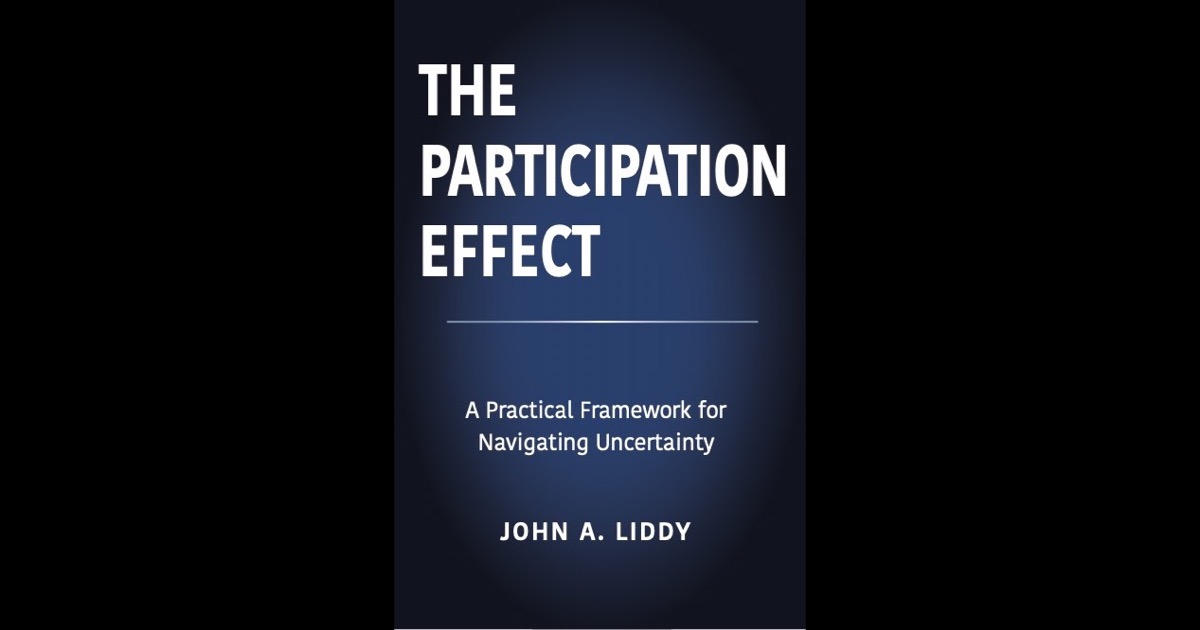
In The Participation Effect, this is a core distinction. Reading a situation accurately and participating in it differently are two separate acts. Perception can open a door, but you still have to walk through it, and walking through it is a different muscle than seeing it. The framework here is that change happens in participation, in what you actually do in the moment, not in how well you understand yourself afterward.
If you want the full framework for turning understanding into action, the book is on Amazon. For a small daily practice in acting on insight rather than collecting it, Daily Rise is built for exactly that.
Why we prefer insight to action
If insight does not change us, why do we keep chasing it.
Because it is safer.
Understanding happens in your head, on your terms, with no risk. You can sit with a realization in private and feel like you are growing. Action is public, awkward, and uncertain. It means doing the new thing badly at first, in front of people, with no guarantee it works.
So the mind offers a tempting substitute. Keep analyzing. Keep tracing the roots. Keep reading the next book. It feels like progress, and it spares you the exposure of actually behaving differently.
There is also a quieter reason. As long as you are still understanding, you are not yet responsible for changing. The work is still in the preparation phase. The moment you admit you understand enough, the only honest next move is to act, and that is the part people avoid.
How insight actually becomes change
The bridge is not more insight. It is small, repeated, slightly uncomfortable action.
Pick one specific behavior, not a grand transformation. Insight tempts you toward sweeping change. Real change comes from one concrete, repeatable action small enough that you will actually do it when the moment comes.
Expect to do it badly at first. New behavior feels fake and clumsy because the old pattern is still the default. That awkwardness is not a sign you are doing it wrong. It is the sign you are doing something new.
Use the moment, not the recap. Change is won or lost in the live moment when the old pattern wants to fire. That is where the new rep has to happen, not in the calm reflection afterward when it is too late to matter.
Count actions, not realizations. Track what you did differently, not how much you understood. If a week of inner work produced no changed behavior, it produced insight, not change, and it helps to be honest about which one you got.
Insight has a job, just a smaller one
None of this means understanding is useless.
Insight tells you what to aim at. It points to the pattern worth changing and helps the new behavior make sense once you start. Without it you might work hard in the wrong direction.
But it is the map, not the journey. A map can show you the road perfectly and never move you an inch down it.
So enjoy the click of understanding when it comes. Then ask the only question that converts it into change. What will I do differently, in the next real moment, even badly.
If you want a framework for crossing the gap from understanding to action, start with The Participation Effect on Amazon, or build the daily habit with Daily Rise. And if you tend to live in analysis and uncertainty rather than action, the book for overthinking and uncertainty page is a good place to start.
You do not think your way into a new life. You act your way into one, one imperfect rep at a time.