The mind wants a verdict
Uncertainty is uncomfortable because the mind treats it like an unfinished case. It wants the judge to return, the evidence to settle, the future to confess what it is going to do.
So you begin the trial yourself.
You replay the conversation. You predict three versions of next week. You ask whether the silence means something. You look for one more clue that will finally let your body relax.
The problem is not that you care. The problem is that spiraling pretends to be preparation while using up the energy preparation would require.
Certainty is not always available
Some situations do not provide a clean answer on demand. A person may not respond today. A job decision may not be made this week. A relationship may be changing before either person has language for it.
The anxious mind treats that absence of certainty as an emergency. It says, "If I can think hard enough, I can get ahead of the pain."
But thinking harder often does not create information. It only creates more simulations. You end up reacting to possibilities as if they are facts, and the body pays the bill.
Ask a smaller question
When certainty is unavailable, the useful question is not "What will happen?"
The useful question is "What can I participate in next?"
That question changes the scale. It does not require the whole future to become visible. It asks for one honest action inside the present situation. Send the message clearly. Eat something. Check the actual calendar. Ask for the information you need once. Turn off the second hour of searching. Take the walk. Return to the work in front of you.
Small is not weak here. Small is how agency returns.
Spiraling is participation too
This is the uncomfortable part. Spiraling is not passive. It is participation in the fear loop.
Every replay strengthens the same pathway. Every imaginary argument spends attention on a situation that may never exist. Every attempt to force certainty teaches the mind that uncertainty is intolerable.
That does not mean you are doing something wrong. It means you have leverage. If spiraling is a form of participation, then redirecting attention is not denial. It is a different investment.
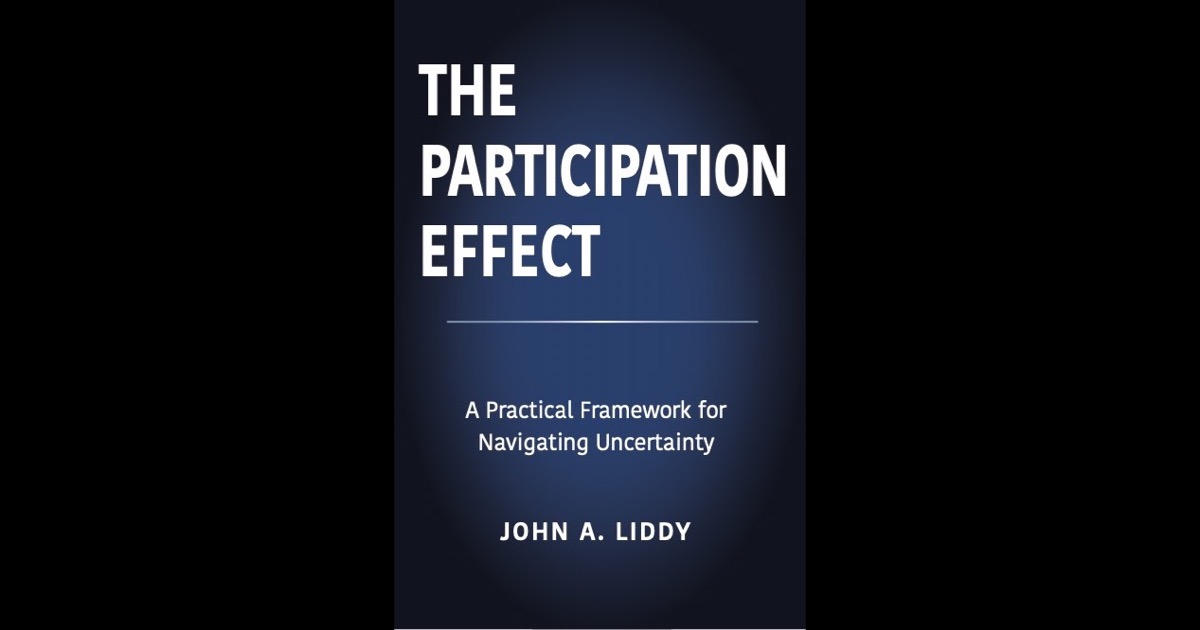
This is exactly the terrain of The Participation Effect. The framework is not about pretending uncertainty feels good. It is about choosing what receives your energy when the old habit is trying to take the whole room.
A practical interruption
Try this when the loop starts:
Name the uncertainty in one sentence. "I do not know whether they are upset." "I do not know if this plan will work." "I do not know what the next month looks like."
Then name one available action. Not the perfect action. Not the action that solves the whole thing. Just the next clean participation.
If the action is waiting, make waiting active. Put a time around it. Decide when you will check again. Do something else with your body in the meantime. Waiting without structure becomes rumination. Waiting with structure becomes a boundary around uncertainty.
You do not need to win the case tonight
Most spirals promise a verdict and deliver exhaustion.
You are allowed to stop before the verdict. You are allowed to say, "There is no new information here." You are allowed to protect tomorrow's energy from tonight's imaginary courtroom.
The future will still arrive. You will meet it better if you have not spent all your attention rehearsing against it.
If you want the larger framework behind this practice, The Participation Effect is on Amazon. If you want a short daily prompt for returning from the spiral to the next usable action, try Daily Rise.