The fear is not new, the conditions are
The thoughts that wake you at 3am are usually the same ones you carried all day.
What changes at night is everything around them.
During the day the fear has competition. There is work to do, people to answer, traffic to watch, a hundred small tasks that ask for your attention. The worry has to share the room.
At 3am the room is empty.
There is nothing to do, no one to call, and nowhere to put the energy. So the mind turns the fear over and over because that is the only activity left.
A tired brain is a worse narrator
Sleep changes how the brain processes threat.
When you are rested, you can hold a worry and a counterpoint at the same time. You can think, this is a real concern, and also, I do not have to solve it right now. Both ideas fit.
When you are half awake and under slept, that balance collapses. The part of the mind that generates worst case stories runs hot, and the part that calmly talks you down runs slow.
So the same thought that felt manageable at noon feels catastrophic at 3am. The content did not get worse. Your capacity to hold it did.
This is the part most people miss. They treat the 3am version of a problem as the truest version, the one that finally cut through the daytime denial. It is actually the least reliable version, produced by the most depleted brain you have all day.
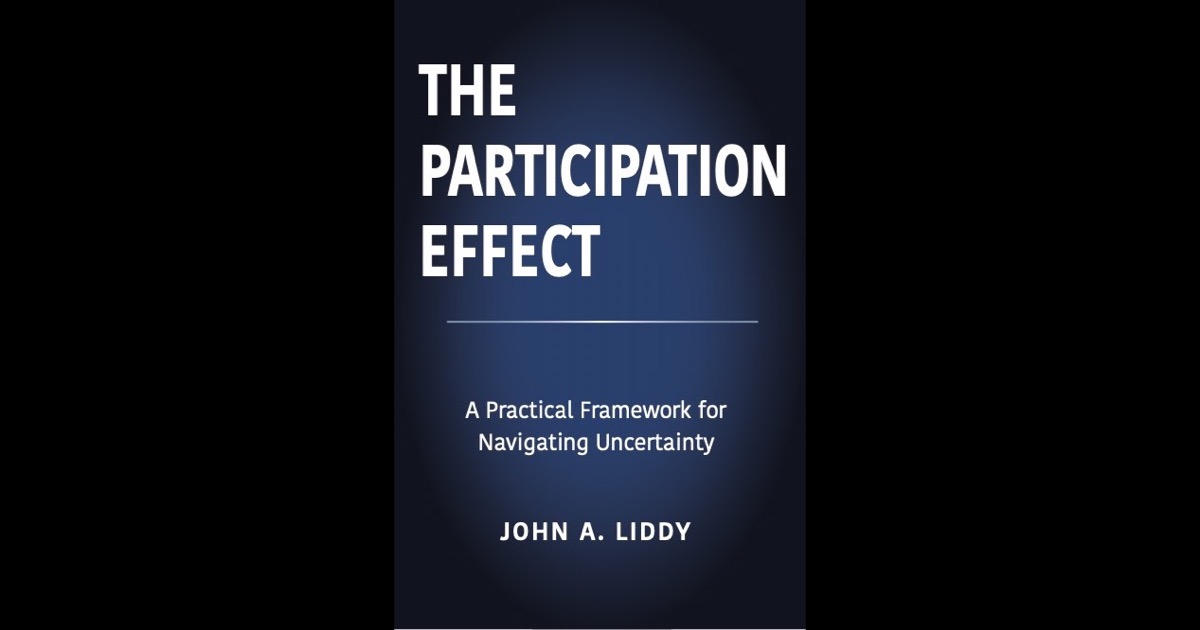
In The Participation Effect, this is the core idea. Perception is not a neutral window onto facts. It is a reading produced by your current state, and a depleted state produces a distorted reading. When you forget that, you start trusting your worst hours as if they were your clearest ones.
If you want the full framework for how state shapes perception, the book is on Amazon. If you want a small daily practice for catching distorted readings, Daily Rise is built for exactly this.
Why the body joins in
Anxiety is not only mental. It moves through the body, and at night the body is primed to amplify it.
You wake slightly. Your heart rate is a little high. Your mind, hunting for a reason, attaches the physical sensation to whatever worry is closest. Now the racing heart feels like proof that the worry is real and urgent.
It is a loop. The thought raises the arousal. The arousal seems to confirm the thought. Around it goes.
Naming the loop does not end it, but it loosens it. The pounding heart is not a verdict. It is a tired nervous system doing what tired nervous systems do at 3am.
What actually helps at 3am
The goal at 3am is not to solve the problem. It is to stop feeding the loop until morning, when you can think clearly again.
A few things tend to work better than fighting the thoughts head on.
Get the worry out of your head and onto something outside it. A note on your phone, a pad by the bed, a single sentence. The mind keeps recycling a thought partly because it is afraid of losing it. Writing it down tells the mind it is safe to let go until morning.
Change your physical state instead of arguing with your mental one. Slow your breath so the exhale is longer than the inhale. Get a glass of water. Move to a different room for a few minutes. You are not running from the thought. You are lowering the arousal that is amplifying it.
Make an appointment with the worry. Tell yourself you will look at this at a specific time tomorrow, with a clear head. This sounds too simple to work, but a worried mind often calms once it trusts the concern will get real attention, just not now.
Stop checking the clock. Every glance turns into math about how little sleep is left, and the math adds pressure that makes sleep less likely.
The morning test
Here is the most useful habit you can build.
When a 3am fear feels enormous, do not resolve it at 3am. Write it down and read it again at a reasonable hour.
Most of the time the daytime version is smaller. Still real, often worth handling, but smaller. The catastrophe shrinks back to a task.
Sometimes the daytime version is still serious, and now you can actually do something about it, because you are rested enough to make a plan instead of spiraling.
Either way you learn the same lesson. The 3am reading was never the truth. It was a reading taken in bad conditions by a tired narrator.
The more you test this, the less power the dark hours have. You start to expect the distortion instead of believing it.
If you want a way to do this work without turning it into one more thing to fail at, start with The Participation Effect on Amazon, or build the daily habit with Daily Rise. And if your nights are mostly overthinking and uncertainty, the book for overthinking and uncertainty page is a good place to start.
The fear at 3am is loud, but loud is not the same as true.