A boundary is not a dramatic announcement
Most people wait too long to set a boundary because they think it has to sound like a courtroom sentence. They imagine a hard speech, a final warning, and a reaction they may not be ready to handle.
That picture makes boundaries feel like punishment. It also makes them easy to avoid.
A better boundary is quieter. It describes what you will participate in and what you will not keep feeding. It does not require the other person to agree that your limit is reasonable. It only requires you to know what continuing to participate is costing.
Punishment tries to control them
Punishment is aimed outward. It says, "I want you to feel the consequence." It stays attached to the other person's reaction. Did they understand? Did they feel bad? Did they finally see what they did?
That attachment keeps you in their weather.
A boundary is aimed inward. It says, "This is the part of my attention, time, body, or peace I am responsible for." The goal is not to make someone suffer. The goal is to stop abandoning yourself in order to keep a pattern alive.
That distinction matters because resentment can disguise itself as strength. If the boundary is secretly a test, you will keep checking whether they passed. If the boundary is a participation choice, the proof is in your behavior.
The question underneath the boundary
Before naming a boundary, ask one plain question: what am I currently participating in that I no longer want to grow?
Maybe it is late-night arguments that never resolve. Maybe it is saying yes before your body has caught up. Maybe it is being available for criticism but not care. Maybe it is translating your needs into hints because directness feels too risky.
The boundary starts where the pattern becomes visible.
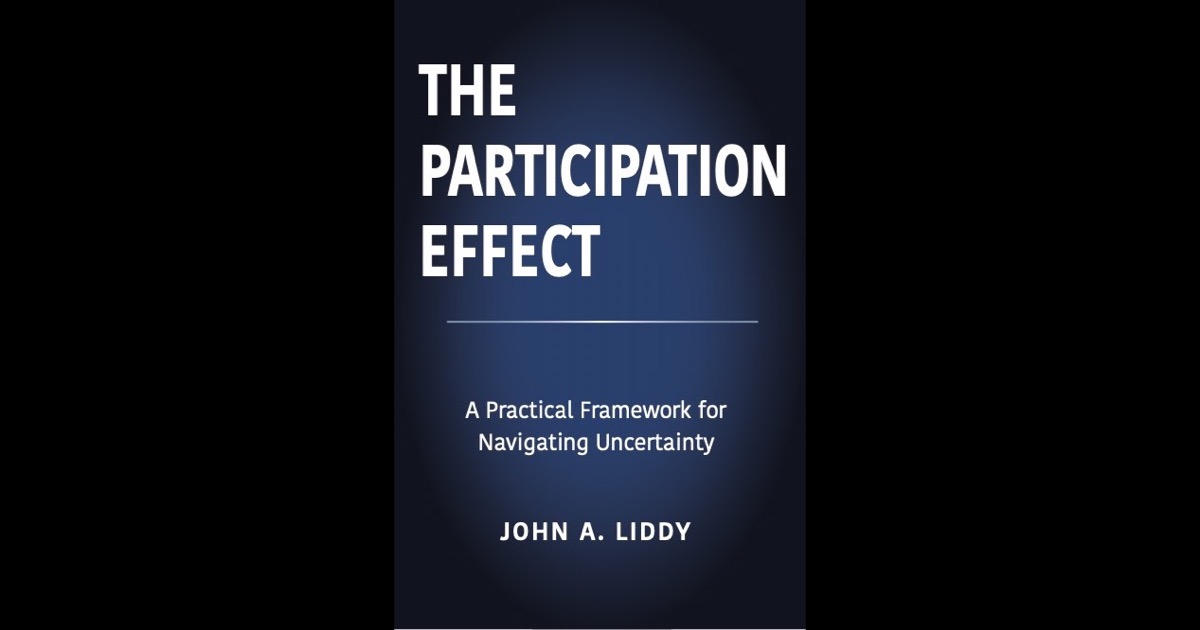
This is the central practice behind The Participation Effect: what you give attention, repetition, and energy to tends to expand. A boundary is not separate from the framework. It is one of the ways the framework becomes visible in ordinary life.
Make it behavioral
The strongest boundaries are specific enough to practice.
"Respect me" is a wish. "I will leave the conversation when voices get raised" is a boundary. "Stop taking advantage of me" is a verdict. "I can help on Saturday for two hours, not all weekend" is a boundary.
Specific boundaries reduce the need for performance. You do not have to sound powerful. You only have to know the line and keep the line.
If guilt shows up, do not treat that as evidence the boundary is wrong. Guilt often appears when you stop playing an old role. It is not always a moral alarm. Sometimes it is just the nervous system noticing that the script has changed.
Kind does not mean available for everything
Kindness without limits becomes a resource other people can spend without asking. Real kindness includes truth. It can say, "I care about you, and I cannot keep doing this." It can say, "I am willing to talk tomorrow, not while we are both flooded." It can say, "That does not work for me."
Those sentences are not cruelty. They are clarity.
The people who benefit from your lack of boundaries may call clarity selfish. That does not make it true. It only means the old arrangement was convenient for them.
The practice after the sentence
The boundary is not the sentence you say. It is the pattern you live after the sentence.
This is where many people lose the thread. They say the boundary, feel the discomfort, and then reopen the old door because the other person is upset. The mind calls this compassion. Often it is fear wearing a nicer coat.
Choose one small boundary you can keep this week. Make it behavioral. Make it clean. Then watch what your attention does when the old invitation appears. That moment is the practice.
If you want a larger framework for this kind of participation, The Participation Effect is on Amazon. If you want a short daily check-in that helps you notice what you are feeding, start with Daily Rise.