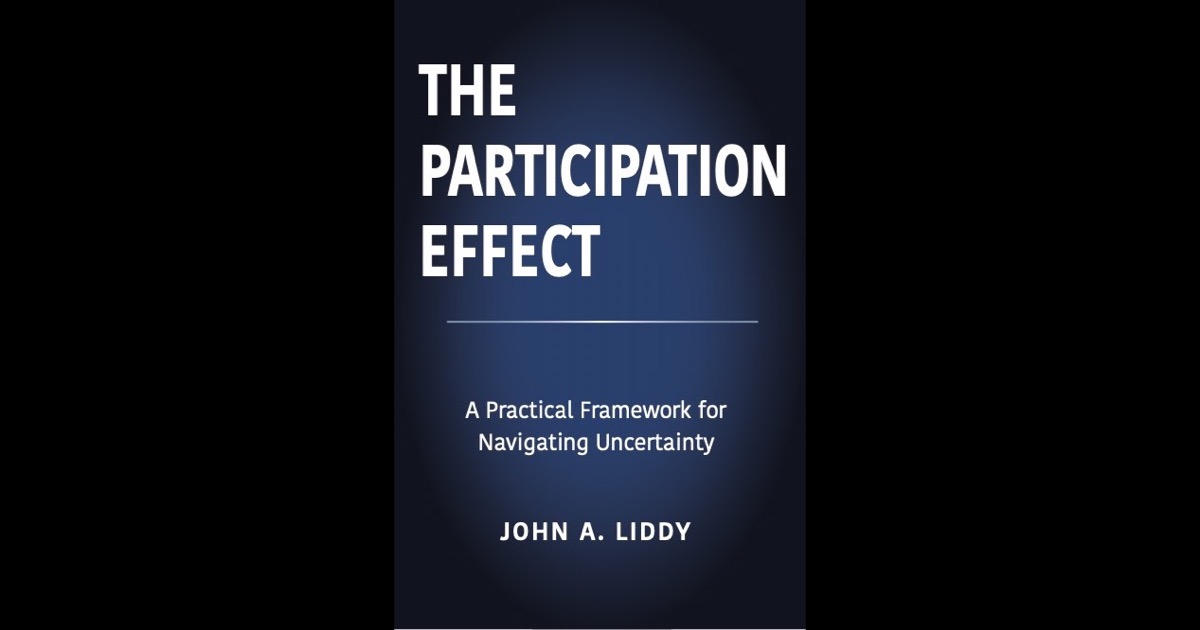
The Book I Carried For Two Years
I had the book in my head for two years before I wrote a word of it.
Not in pieces. The whole thing. The framework, the four pillars, the arc of the personal story, the way the chapters would build on each other, the line that would close the introduction. I knew where it started and where it ended. I had taught it to people in real time across hundreds of conversations. I had lived it. I had survived it. The book existed everywhere except on a page.
I am not going to tell you I was lazy. I worked seven days a week through that whole stretch. I just could not get the book out of my head and onto the page faster than the page could absorb it. The bottleneck was not the thinking. The thinking had been done for years. The bottleneck was the distance between the thinking and the writing.
Then I started using AI as a writing tool, and within a few weeks the chapters were existing.
Not because the AI wrote my book. The AI did not have my framework. The AI did not have my story. The AI did not know what came after chapter three because I was the one who knew what came after chapter three. What the AI did was remove the friction between the thing I had been carrying and the page that was supposed to receive it. I would think out loud, the AI would catch the shape of what I was saying, I would push back on what was wrong, I would keep what was right, and the chapter would land.
The book is mine. It has always been mine. The tool just made the carrying lighter.
The Pattern Is Almost Boring
Every tool that lowers the barrier to making something gets called fraud by someone.
Photography was not real art. Painters were the real artists. Then photographers became artists too, and now nobody argues about it.
Samplers were not real music. Real musicians played instruments. Then sampling became its own form, and now nobody argues about it.
Word processors were not real writing. Real writers used typewriters or pens. Then word processors became how everybody writes, and the question disappeared.
Wikipedia was not real research. Real research happened in libraries. Then Wikipedia became how everybody finds the first layer of any topic, and the question disappeared.
Synthesizers were not real instruments. Then synth music became some of the most influential music of the late twentieth century, and the question disappeared.
The pattern is so consistent it's almost boring. A new tool lowers the barrier to making something. The people who built their identity on the old barrier feel threatened, because the old barrier was part of how they knew who they were. They call the new tool fraud. They call the people using it cheaters. They wait for the question to be settled, and the question gets settled the same way every time. By the work.
You can argue about photography forever, or you can look at a photograph that moves you and admit that something is happening there that the argument cannot reach.
This is the same shift the framework in The Participation Effect describes about your own life. Refusing the available tool because it does not look like the old work is one of the ways stress narrows perception. The two-minute daily practice is built around the opposite move.
The Question Isn't Did You Use AI
The actual question, the one worth asking, is not whether you used a tool.
The actual question is whether there is a coherent human vision driving the work, and whether the output bears the fingerprints of that vision in a way that would not exist without you.
That is a real test. It is harder than the lazy version. It does not let you off the hook just because you sweated, and it does not let you off the hook just because you did not sweat. It asks something more honest. It asks: is this thing yours, in the way that matters.
Here is how to know whether something passes the test.
Strip the human out. Imagine the same prompt run by a stranger. Would the same thing come out? If yes, it's not yours. If no, it's yours, because the variable that produced the result was you.
The book I wrote does not exist if you take me out. Nobody else has my framework. Nobody else has my chapter on the flood story. Nobody else makes the specific choices I made about what to keep and what to throw away. The same prompt run by a stranger produces a different book. That's the proof. Not the labor. The fingerprints.
What I Brought That The Tool Couldn't
Lived experience. The years on Sunset Strip in my rehab practice, the patients I sat with, the things I watched fail and the things I watched work. None of that is in the AI's training data in any usable form. It's in mine. When the book talks about a clenched jaw at three in the morning, that comes from a particular three in the morning that the AI does not have.
The framework. Two decades of refining it before I had any tool to write it down. The pillars, the order, the language, the way one idea opens into the next. The AI learned the framework from me, sentence by sentence, in the conversation that produced the book. It did not bring the framework. It received it.
The choices. AI generates many possibilities. The author chooses. Choosing is authorship. Editors are authors. Directors are authors. Curators are authors. Anyone who has ever worked with a good editor knows that the editor's choices are part of the writing, not separate from it. With AI, the author becomes editor and writer at the same time, and the choosing is constant.
The willingness to throw things away. Most of what the AI produced for me did not survive. I rejected entire chapter drafts. I asked for the same paragraph nine different ways and kept none of them, then wrote the paragraph myself in two sentences. The work is in the rejecting as much as in the keeping.
The reason it had to exist at all. The AI does not need the book to exist. I do. That motivation, the reason behind the project, never came from the tool. It came from the years of carrying it.
Tools Are How We Participate
This is the part where the essay turns toward what the framework is actually about, because the AI question is a smaller version of a much bigger one.
The participation effect is not a metaphor about the universe. It is a description of how perception, decisions, and behavior actually work inside complex systems. Your emotional state shapes what you can see. What you can see shapes what you can choose. What you choose, over and over, shapes the trajectory of your life. None of that requires anything mystical. All of it requires that you actually participate, with whatever is in your hands, on the day you have available.
Tools are how we participate. They always have been. Refusing a tool because it doesn't look like the older tool is a way of refusing to participate in the version of the world that is currently in front of you. It feels like principle. It is usually fear dressed as principle.
The painter who refused to acknowledge photography lost time. The musician who refused to use synthesizers lost time. The writer who refused word processors lost time. None of them stopped photography or synthesizers or word processors. They just chose to participate in the world less, by a measurable amount, for as long as the refusal lasted.
I am not making the case that everyone should use AI. I am making the case that the criticism "it doesn't count if you used a tool" has never been true about anything, and the people who deploy it about AI are deploying an old refusal in a new costume.
The Things That Exist Now
The book exists. The book promotion site exists. The Daily Rise practice app exists. The website monitor that tracks all of it exists. The ADA compliance audit tool I run for small businesses exists. None of them existed two years ago. None of them would exist now without the tools I used to build them.
None of them are the tools' creations. They are mine. The tools just made the carrying lighter.
The book is not slop because I used AI to help me write it. The website is not fraud because I used AI to help me build it. The audit tool is not cheating because I used AI to help me code it. The criterion is not the tool. The criterion is whether anything would exist without me, and the answer in every case is no. Strip me out and the projects do not exist. Strip the AI out and they exist slower, smaller, later, but they still exist, because I am the variable that has been carrying them.
Tools change. The person inside doesn't.
That is the oldest story in the history of art and the oldest story in the history of work. We give it new names every time the tools change, and the answer is the same every time.