The Diagnosis That Keeps Getting Missed
You think you're tired. Maybe you tell yourself it's just a hard quarter. You double down. You grind harder, work longer, push through. Because that's what you do. That's what got you here.
And then one day you realize you've been making the same bad decisions for six months and you have no idea why.
That's not fatigue. That's burnout. And the cruel part is that burnout hides inside the identity you built to succeed.
Entrepreneurs don't burn out from lack of effort. They burn out from sustained effort without recovery. The nervous system eventually stops bouncing back. The baseline shifts downward. And here's what nobody tells you about that shift: it changes what you can see. Not metaphorically. Literally.
What Burnout Actually Does to Your Brain
There is a mechanism at work here that most people don't understand, and it's worth slowing down to look at it.
When your nervous system is under sustained stress, your perception narrows. This isn't a figure of speech. Under threat, the brain filters the world aggressively. It keeps what feels urgent. It discards the rest. You see fewer options, interpret situations more negatively, and react from a survival state rather than a thinking state.
This is useful when the threat is temporary. When the threat runs for months or years, it becomes a permanent condition. The filtering never turns off. And you don't notice, because a narrowed perception feels completely normal from the inside.
I know this because I lived it. For years I was building, straining, grinding, operating at a 3 on the emotional scale and calling it "focused." I wasn't focused. I was depleted. I thought the only solution to every problem was to work harder. Not because that was true. Because my narrowed perception couldn't generate any other options.
The Blind Spot No One Talks About
Here's the part that should scare you.
When you're burned out, you don't feel burned out. You feel like you're pushing through. The internal narrative sounds like resilience. "I can handle this. I just need to get through this stretch." But that story is being generated by a nervous system operating at the bottom of its range, and it will keep generating that story until something breaks.
The blind spot isn't in your work ethic. It's in your perception.
At a 3 on the emotional scale, opportunities look like traps. People who want to help look suspicious. Ideas that might actually work don't surface, because your brain is in containment mode, not expansion mode. You make the same three moves over and over because those are the only moves your depleted perception can find.
This is how smart, capable entrepreneurs run companies into the ground. Not through stupidity. Not through laziness. Through the invisible narrowing that comes with a nervous system that hasn't had real recovery in too long.
The decisions weren't bad because the person was bad at decisions. The decisions were bad because the perception that generated them was operating from a depleted baseline.
Why Working Harder Is the Wrong Prescription
The standard entrepreneur response to falling behind is acceleration. More hours. More meetings. More pressure. More hustle.
This is exactly wrong.
When your perception is narrowed, adding more inputs doesn't help. It gives your narrowed perception more material to misread. You process everything through the same constricted filter. You make more decisions with the same impaired judgment. The work piles up. The quality drops. And you interpret that drop as further evidence that you need to push harder.
It's a trap with no natural exit. The behavior that feels most like the solution is actually the source of the problem.
I had a client once, a founder, who had been running on four hours of sleep for two years. He was proud of it. He had the output to show for it. He also had a clenched jaw and two strained relationships with his co-founders. When I asked him what he would do if he weren't behind, he went quiet. He didn't have an answer. He hadn't thought about anything other than being behind in so long that "not behind" had become a foreign concept.
That's the fully developed version of the blind spot. Not just narrowed perception. The inability to imagine any other state.
What Recovery Actually Looks Like
The word "recovery" gets attached to a lot of vague advice about self-care and unplugging. I want to be more specific than that.
Recovery, in the context of burnout, is nervous system repair. It's not a vacation, though a vacation might be part of it. It's not a weekend off. It's a sustained practice of returning to baseline, measured in small daily shifts over weeks and months.
The first tool that actually helps is the simplest one: stop pretending you're at a 7 when you're at a 3. Start using a number. Where are you right now, on a scale from 1 to 10? Not where you wish you were. Where you are. Your heart rate, your breathing, the tension in your shoulders. That is your data.
Most entrepreneurs in burnout are walking around at a 3 or 4, calling it a 6 because they're still functional. The misread is part of the problem. You can't navigate toward better if you won't acknowledge where you're starting.
The second tool is facing the worst case. Not to dwell in it. To test it. Most of what you're bracing against has been braced against for so long that it has become ambient dread rather than actual risk. Face it directly. If the worst case happened, would you survive it? Almost always, the answer is yes. And once you find the worst case survivable, the nervous system stops bracing against it at full strength. That drop in tension is real. It's not positive thinking. It's pressure release.
The third tool is belief auditing. When you're depleted, the internal narrative turns brutal fast. "I'm losing ground." "This isn't going to work." "Everyone else figured this out except me." These aren't facts. They're beliefs generated by a nervous system under sustained stress. And beliefs, it turns out, are more movable than they feel in the moment. You don't have to jump from "I'm failing" to "I'm succeeding." You just have to find the next honest thought. "I'm struggling and I've survived struggles before." That's enough to start.
The Compound Effect of Getting Your Baseline Back
Here's what changes when you stop operating at a 3 and start operating at a 6 or 7.
Your perception widens. You start seeing options that were invisible before. Not because those options appeared out of nowhere, but because your brain is no longer filtering them out. Partnerships that would have seemed too complicated look manageable. Problems that felt catastrophic reveal themselves as solvable. People who seemed difficult to work with become easier, because you're no longer interpreting them through a threat filter.
The decisions you make from a 7 are simply different from the decisions you make from a 3. Not a little different. Fundamentally different. And those decisions compound.
One month of operating from a higher baseline shifts your trajectory. Three months shifts it visibly. Six months and the people around you notice the change before you fully do. This is the part most burnout advice misses. It frames recovery as a return to where you were. But if where you were was already a depleted baseline, recovery isn't a return. It's a new territory.
Most entrepreneurs have never operated consistently from 7 or above. They've just fluctuated between 3 and 5 and called the peaks "good days." Raising the floor is the whole game.
Where to Start
There's no dramatic intervention here. No retreat, no transformation weekend, no single epiphany that fixes it.
The practice is daily, small, and cumulative. Check in once a day with where you actually are. Try one small shift. Check in again. That's it. If you do that for thirty days, you will have data showing you whether it's working. Not belief. Data.
The Daily Rise app was built for exactly this. Two minutes. One check-in. One small shift. You're not being asked to transform. You're being asked to show up once a day and take the temperature.
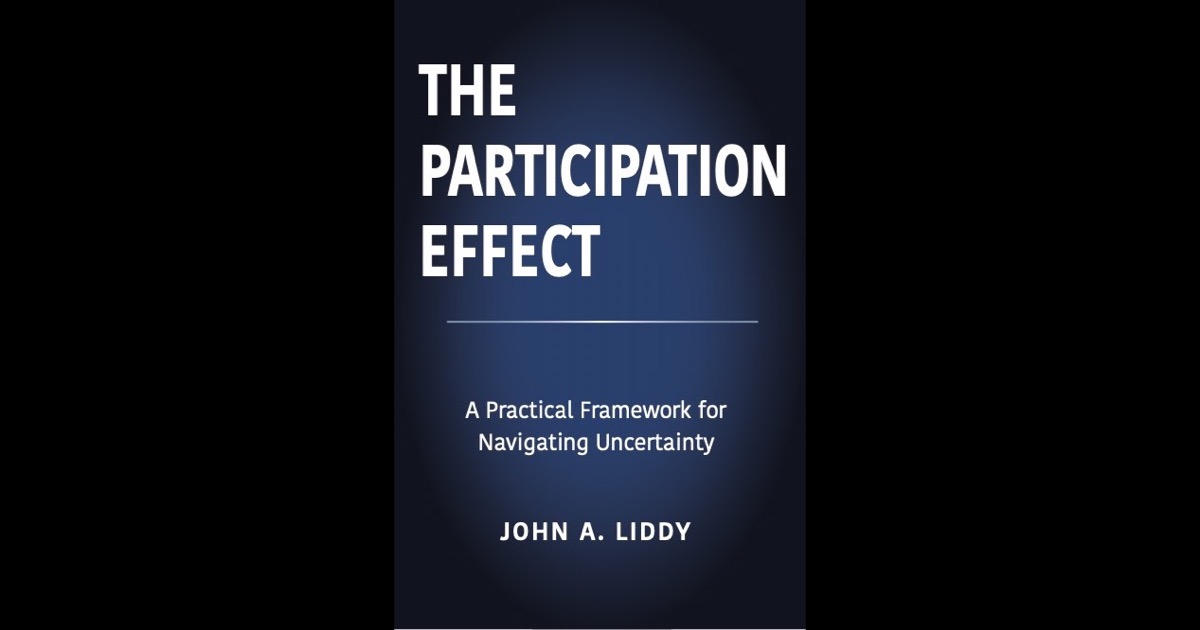
The book behind it, The Participation Effect, lays out the full framework. Why your emotional state affects your perception. Why your perception affects your decisions. Why those decisions compound into outcomes. And how the same system that narrowed your options when you were depleted can widen them when you're regulated.
This is not a self-help book. It's an operating system. One that actually accounts for where you are instead of assuming you're already fine.
If you're an entrepreneur who suspects you haven't been fine for a while, start there.