You Got Sober. Now What?
Here is the thing nobody tells you about getting sober: removing the substance was the easy part. Or maybe not easy. Maybe it was the hardest thing you have ever done. But it was the part with a clear objective. Stop using. Stop drinking. Put it down.
You did that. And then something unexpected happened. The feelings came.
Not gently. Not one at a time. They came like a dam breaking. Rage you did not know you were carrying. Grief you had been outrunning for years. Anxiety that showed up at 3 AM and would not leave. Sadness that had no obvious cause and no clear end.
This is the part of recovery that blindsides people. Because getting sober removes the anesthetic, but the thing that needed anesthetizing is still there. All of it. Untouched. Waiting.
This is where emotional sobriety begins.
What Emotional Sobriety Actually Means
Emotional sobriety is not about being calm all the time. It is not about having a good attitude. It is not about "thinking positive" or pretending things are fine when they are not.
Emotional sobriety is the ability to feel your emotions without being destroyed by them or reaching for the old escape hatch.
That is the whole thing. You feel the feeling. You do not collapse into it. You do not numb it. You do not run. You just feel it, recognize it for what it is, and keep going.
It sounds simple on paper. In practice, it is the hardest skill in recovery. Because for years, maybe decades, you trained yourself to do the exact opposite. Every uncomfortable emotion had a solution: use. Drink. Numb. Check out. And that training does not disappear just because the substance does.
What you are left with is a nervous system that has no idea what to do with a difficult emotion besides panic.
Why Emotions Feel Like Threats
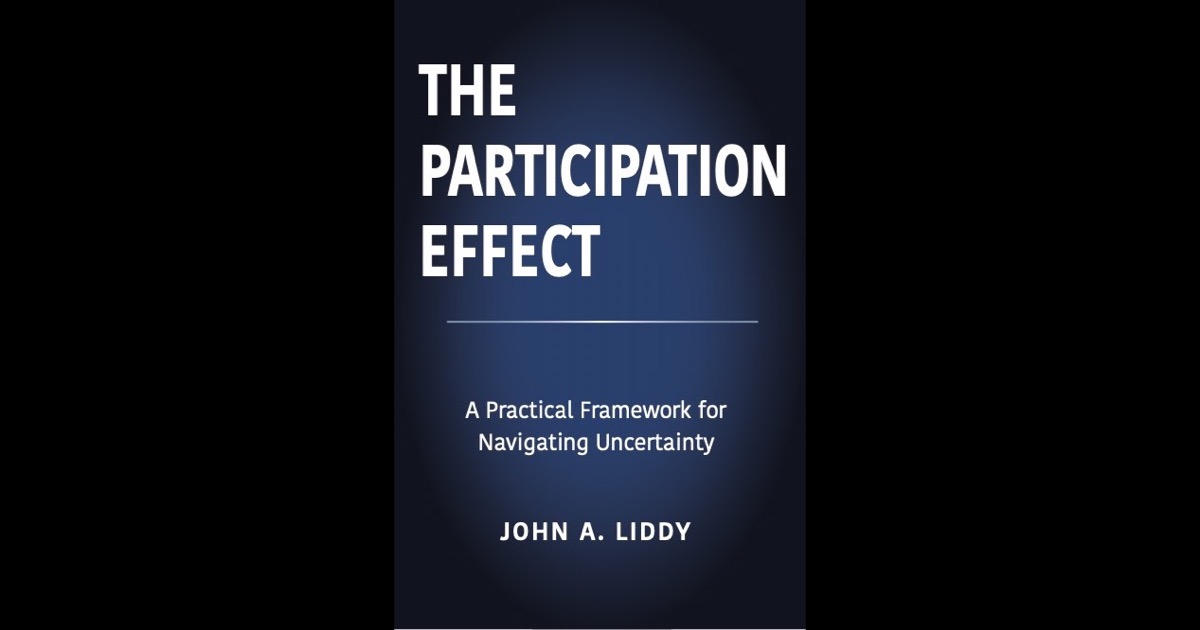
Here is something I explore in depth in The Participation Effect: when you are under stress, your perception narrows. Literally. You see fewer options, interpret things more negatively, and react from a survival state rather than a thinking state.
For someone in recovery, this narrowing effect is amplified. A wave of anger does not feel like anger. It feels like a threat. A surge of loneliness does not feel like loneliness. It feels like proof that sobriety is not working. Anxiety does not feel like a passing state. It feels like the permanent condition of your life.
That narrowed perception is what makes cravings so powerful. A craving is not really about the substance. It is your brain's narrowed perception telling you that there is exactly one solution to this unbearable feeling, and you already know what it is.
This is the trap. The emotion is not the problem. The narrowed perception around the emotion is the problem. And until you learn to widen that perception, every difficult feeling is a relapse risk.
Emotions Are Signals, Not Emergencies
One of the core ideas in The Participation Effect is that emotions are informational. They are not happening to you. They are telling you something.
Anger tells you a boundary has been crossed. Sadness tells you something matters. Anxiety tells you that you are uncertain about something you care about. Fear tells you there is a perceived threat, real or imagined, that needs your attention.
None of these are emergencies. But if you spent years using substances to silence these signals, they start to feel like emergencies. Your tolerance for emotional discomfort is at zero. So a normal amount of frustration feels catastrophic. A normal amount of sadness feels like depression. A normal amount of uncertainty feels like the world is ending.
Emotional sobriety is rebuilding that tolerance. Not by gritting your teeth and toughing it out, but by learning to recognize the signal, acknowledge it, and respond to it without the old automatic reaction.
Practical Tools That Actually Work in Recovery
The framework in The Participation Effect was not written specifically for addiction recovery. But it maps onto recovery in ways that are hard to ignore, because the underlying problem is the same: an inability to sit with difficult emotions and a pattern of reaching for external relief instead of building internal capacity.
Here are the tools from the book that directly apply:
The 10-Point Emotional Scale. This is a simple self-assessment tool. Where are you right now, on a scale from 1 (the worst you have felt) to 10 (clear, grounded, capable)? The point is not to be at a 10. The point is to know where you are without judging yourself for it. If you are at a 3, that is data, not a failure. You cannot navigate somewhere better if you do not know where you are starting from.
The Acceptance Bridge. This is a technique for dealing with the worst-case fears that fuel cravings. You face the worst case head-on. Not to dwell in it, but to test it. Is it survivable? Almost always, the answer is yes. And once you find the worst case survivable, the grip loosens. The craving loses its urgency because the fear beneath it has been deflated.
Belief Ladders. In recovery, your internal narrative is often brutal. "I am broken." "I will always struggle." "I cannot handle this." A belief ladder does not ask you to jump from "I am broken" to "I am healed." That is dishonest and your brain knows it. Instead, it moves you one honest step at a time. "I am broken" becomes "I have been through a lot and I am still here." Then that becomes "I have survived harder things than this." Then maybe, eventually, "I am building something different." Each step is small. Each step is true. And those small shifts, done consistently, change the entire trajectory.
Breathwork and Grounding. These are not abstract wellness concepts. They are nervous system interventions. When a craving hits or an emotion floods you, your nervous system is in overdrive. Structured breathing and grounding techniques bring you back into your body and out of the reactive loop. Four counts in, hold, four counts out. Feel your feet on the floor. Name five things you can see. These sound simple because they are. They work because they interrupt the automatic pattern long enough for you to choose a different response.
Small Daily Shifts. Recovery lives in the phrase "one day at a time," and there is a reason for that. You cannot overhaul your emotional life in a weekend. But you can move from a 3 to a 4 today. And from a 4 to a 5 tomorrow. These small shifts compound. Over weeks and months, a person who consistently moves one point up the emotional scale is living in a fundamentally different reality than someone stuck at the bottom. Not because anything magical happened, but because clarity allows you to see more options, make better choices, and build momentum.
This Is Not Woo. This Is Survival.
I want to be direct about this because people in recovery have well-calibrated BS detectors, and they should.
The Participation Effect is not a positive-thinking book. It does not promise that if you feel good, good things will appear. It does not pretend that emotional regulation alone will fix your life.
What it says is this: your emotional state affects your perception. Your perception affects your decisions. Your decisions affect your outcomes. And over time, those outcomes shape the direction of your life.
That is not mystical. That is observable. And for someone in recovery, it is critical. Because when you are stuck in fear, anger, or despair, your perception narrows and the only solution your brain can find is the old one. But when you can shift your emotional state even slightly, your perception widens, and you start seeing options that were invisible thirty seconds ago.
That is what emotional sobriety looks like in practice. Not feeling great all the time. Not being "fixed." Just having enough clarity to choose something different when the old pattern shows up.
A Daily Practice for People Who Need One
Daily Rise is a free companion app built around the framework in the book. It takes about two minutes. You check in with where you are on the emotional scale, try one small shift, and check in again.
That is it. No journaling prompts. No affirmations. No 30-day challenges. Just a daily practice of noticing where you are and seeing if you can move one point in a better direction.
For people in recovery, this kind of structure matters. It gives you a touchpoint every day that is not a meeting, not a therapist, not a sponsor. It is just you, checking in with yourself, building the habit of emotional awareness one day at a time.
If you want the fuller framework, start with Chapter One. The book goes deeper into the emotional scale, belief ladders, and the small daily practices that make those moments more survivable.
The Work After the Work
Getting sober is the beginning of recovery, not the end. The real work is learning to live in your own skin without the buffer. Learning that a bad feeling is not a death sentence. Learning that you can be at a 3 on the emotional scale and still choose not to use. Learning that emotions pass if you let them.
Emotional sobriety is not a destination. It is a practice. Some days you will be better at it than others. Some days the old patterns will be loud. That is not failure. That is just the work.
But if you are willing to do it, if you are willing to feel the feeling instead of running from it, something shifts. Not all at once. Not dramatically. But steadily. And one day you realize that the emotions you were so afraid of are just signals. They were never the enemy. They were the information you needed all along.