When your mind turns one problem into ten
You know the feeling.
One email lands. One bill hits. One conversation goes sideways. Then your body tightens and your mind starts building futures you did not ask for.
By midnight you are not dealing with one problem anymore. You are dealing with bankruptcy, humiliation, rejection, failure, loss, and every version of your life collapsing at once.
Not because all of that is happening.
Because your nervous system is treating uncertainty like a fire.
That is where most coping advice breaks down. It tries to reason with you after the spiral has already started. It tells you to calm down. Think positive. Be grateful. Get perspective.
Try that at 3 AM with your jaw clenched and your chest tight and see how far it gets you.
It is not that gratitude is bad. It is that you are reaching for the wrong tool at the wrong altitude.
Why reassurance fails when you are already activated
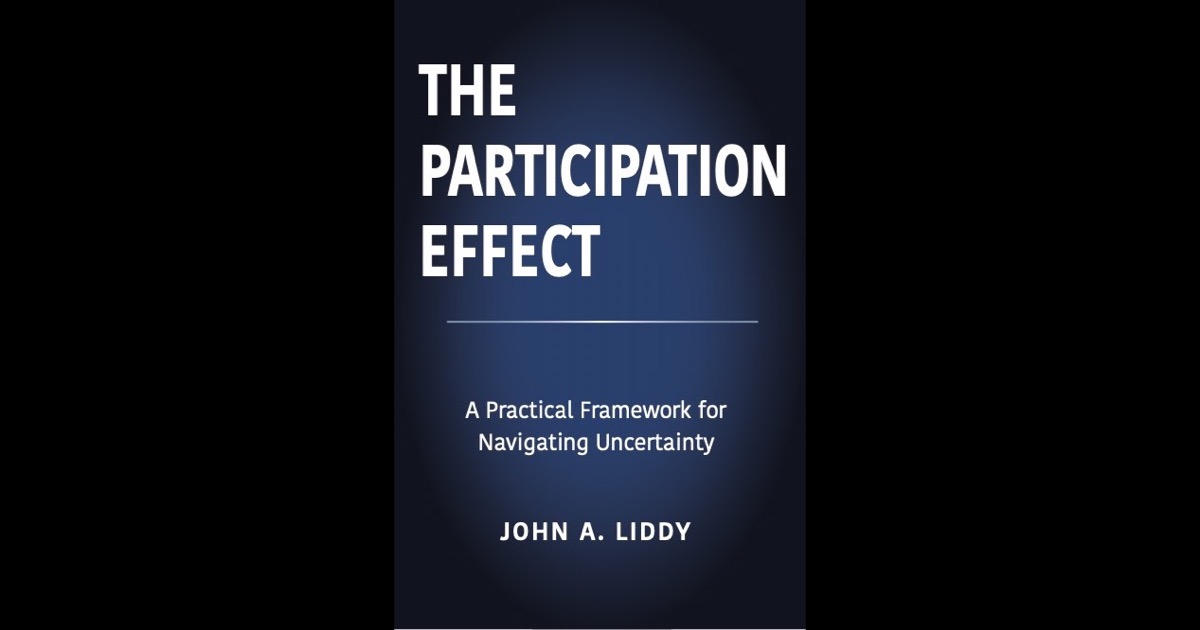
The core idea in The Participation Effect is simple: the tool has to match the state you are in.
If you are below neutral, the job is not inspiration. The job is stabilization.
That is why the book uses the emotional scale instead of vague advice about mindset. At the heavy middle of the scale, where fear and doubt are running the show, the move is not "cheer up." The move is containment.
That is what the acceptance bridge is for.
If you want the broader framework behind it, you can read the book on Amazon or start with the companion practice on Daily Rise.
What the acceptance bridge actually does
The name matters.
It is not a cure. It is not a mindset hack. It is not a promise that the thing you fear will disappear.
It is a bridge.
Bridges do not erase the river. They give you a way across it.
The acceptance bridge starts with naming the fear specifically.
Not "everything is falling apart."
More like: I lose this client. I lose this deal. I have a hard conversation. I need six months to recover. I hate it, but I survive it.
That last part is the hinge.
Could you survive it?
Not would you enjoy it. Not would it be easy. Could you survive it?
Most panic feeds on vagueness. The mind keeps the fear blurred because blurred fears feel infinite. The minute you give the thing edges, it changes shape. It is still hard. It is not endless anymore.
That is acceptance in this framework. Not approval. Not passivity. Recognition.
This is what is being feared.
This is what it would cost.
This is what survival would still look like.
The second half is smaller than your mind wants
Once the fear is named, the next move is smaller than most people expect.
One small action.
Not a master plan. Not a five-year strategy. One action that makes the worst case slightly less bad.
Return the call.
Open the envelope.
Send the email.
Book the appointment.
Write the first paragraph.
The small action matters because doubt dissolves in movement. Every anxious spiral is built on the fantasy that you are trapped. One useful action does not solve the whole problem, but it breaks the hallucination of total helplessness.
That is why the bridge works. It does not demand certainty before action. It gives you enough ground to act without certainty.
This is not surrender
People hear the word acceptance and think it means giving up.
It means the opposite.
Resistance says, "I refuse to admit this is happening," and then burns energy fighting reality.
Acceptance says, "This is what is happening. Now what can I do from here?"
That is a stronger position, not a weaker one. You stop spending your best energy arguing with facts that are already in the room. You can finally use that energy to respond.
That response may be practical. It may be emotional. It may be relational. It may just be getting out of bed and putting your feet on the floor.
The point is not drama. The point is traction.
What it feels like in real life
The acceptance bridge is not usually dramatic.
It feels more like a quarter-inch of breathing room.
Your heart rate eases a little.
The story in your head loses some of its absolute certainty.
You stop acting like every thought is evidence.
Then you do the next small thing.
And the next.
This is how people change direction long before they feel powerful. They stop waiting for confidence and start using evidence. The evidence is not "I feel amazing." The evidence is "I faced the fear, I did one thing, and the world did not end."
That is enough to keep going.
The bridge is a practice, not a one-time breakthrough
Some days this works fast. Some days it works slowly. Some days you have to cross the same bridge more than once before noon.
That does not mean it is failing.
It means you are human.
The goal is not to become someone who never drops into fear. The goal is to become someone who knows what to do when it happens.
That is a much more practical goal. It is also the one that holds up under real life.
If you have been trying to think your way out of panic, stop demanding a higher-state tool from a lower-state body.
Name the fear.
Face the worst case.
Take one small action.
That is the bridge.